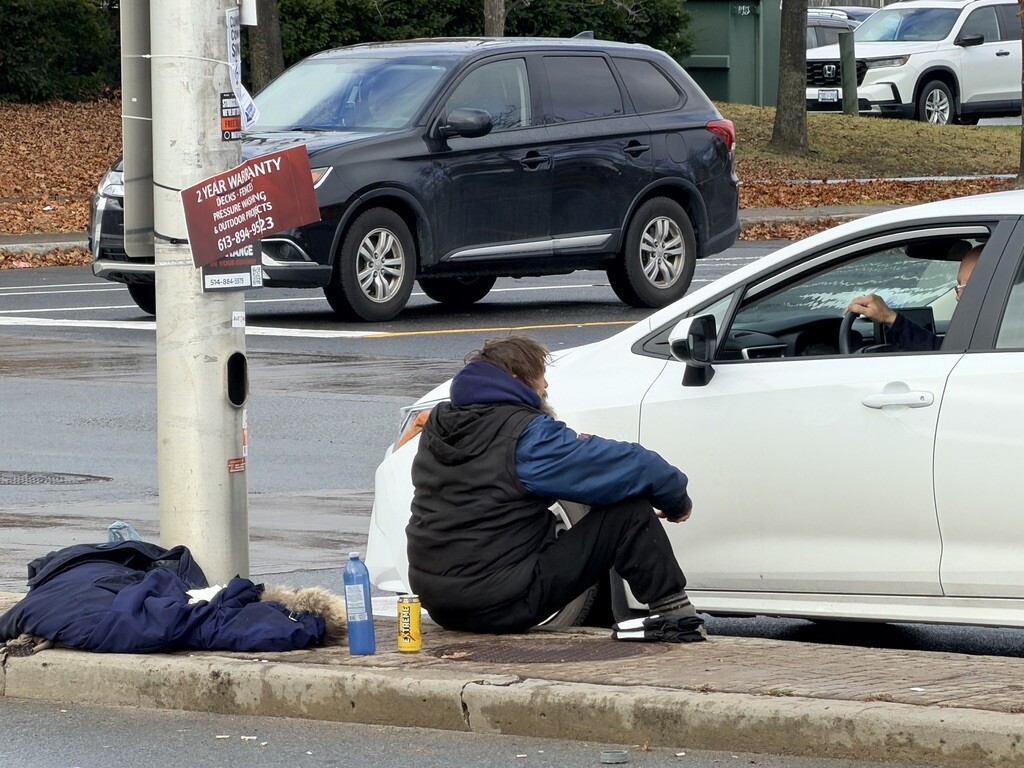
Most people on our streets are not there for lack of a cheque. Privacy, consent, and capacity law freezes everyone who wants to help. Here is the gap, and the legislation that would close it.
Most of us walk past, unsure what to say or what to do. This is not about blame. We have personally managed cases like this one, and we know exactly why they are so hard to resolve. The hard truth is that the usual answers, more money and more shelter beds, are necessary but not enough on their own.
This is not a failure of compassion. It is a gap in legislation.
of people experiencing homelessness in Canada live with a mental illness.
of homeless respondents in a 2024 Toronto survey named mental health as a factor in losing their housing.
people homeless on a single night nationally in Canada's most recent Point-in-Time count, and rising.
The federal Reaching Home strategy has committed $5 billion over nine years and helped 112,000 people into more stable housing since 2019. Yet homelessness has still increased, and the program is not on track to meet its own target of a 50% reduction by 2028.
Canada's privacy framework requires a person's explicit consent before anyone can share their mental-health information. That is a reasonable protection for someone with full mental capacity. But when a person is living outdoors in November, refusing help, and showing signs of serious psychiatric illness, that same framework becomes the wall that stops everyone.
The outreach worker cannot share the file with the shelter. The shelter cannot share it with the hospital. The family cannot get information from the physician. Everyone is legally frozen, and the person stays on the street.
Across Ontario, more than 1 in 50 adults discharged from psychiatric hospitalization are homeless at discharge. At one major Toronto hospital, one in five psychiatric patients left homeless. The result is predictable: homeless patients have a 43% higher 30-day readmission rate, and there is currently no provincial strategy in any Canadian province for discharging homeless patients from hospital.
A year in jail or eighteen months in hospital, then release straight back to the street. The door keeps turning.
Four steps. Each builds on laws that already exist in every province, but are almost never applied to people who are homeless.
A formal process letting a family member or outreach worker trigger a mandatory mental-health evaluation for a person who is homeless and showing signs of incapacity.
Courts empowered to rapidly appoint a caretaker, from the family or a trained community advocate, when a person cannot make decisions for themselves. The legislation exists; it just isn't applied here.
No one assessed as mentally ill should be discharged to the street. Require a confirmed housing or shelter placement, with case-management follow-up for a minimum of 90 days.
Orléans has a handful of these cases, not hundreds, exactly the right scale for a proof of concept. Test it here, bring the evidence to Parliament, build the permanent policy.
Neighbours, caregivers, and front-line families have shared what they see. The themes are consistent, and they map directly onto the gap above.
Caregivers describe months of waiting, too many forms across too many organizations, and a social-housing system backlogged further by recent closures. Help exists on paper but is hard to reach in time.
Without delegated authority, relatives often cannot get information or act. Power of attorney and next-of-kin rules apply only in narrow cases, and patient confidentiality blocks the rest.
People leave jail or hospital with no confirmed place to go, sometimes after a year or more, and the cycle restarts within weeks. This is the discharge gap in real life.
Residents point out that people sleeping outside needed a place months ago. Faster shelter and transition units help, and we should pursue them alongside the legislative fix.
For someone in untreated psychosis, a key to a unit without support rarely holds. Housing and care have to arrive together, which is the whole point of case management.
Many avoid shelters and downtown out of fear. The answer is to empower the people they already trust, not to force them, so help can actually reach them.
